What Makes Yak Wool the Fiber Cashmere Pretends to Be
Picture the Mongolian steppe in January. Wind. Open grassland to the horizon. Forty below zero.
The yak doesn’t migrate. It doesn’t hibernate. It stands in that cold and grows the answer: a hidden undercoat of down the herders call khullu — fibers measuring just 16 to 19 microns across. That’s cashmere-class fineness, the threshold below which fiber stops feeling like wool and starts feeling like warmth itself.
But here’s where yak leaves cashmere behind.
Each khullu fiber is structured to trap warm air with remarkable efficiency — which is why yak wool insulates better than merino and outwarms cashmere at the same weight. It wicks moisture, so you stay warm without ever feeling clammy. It resists odor naturally, so your sweater stays fresh through weeks of wear. And it’s dramatically stronger than cashmere, which means the soft sweater you buy this winter is still the soft sweater you’re wearing five winters from now — no pilling, no thinning, no bald elbows.
One more thing women with sensitive skin will love: yak wool is naturally low in lanolin, the substance behind most “wool itch.” If wool has always made you scratch, yak wool is the fiber that finally won’t.
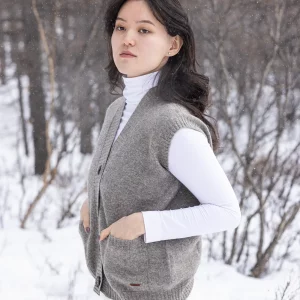
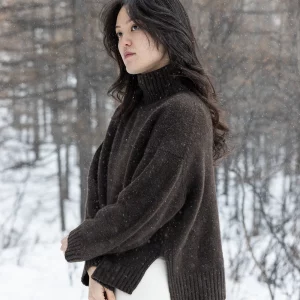
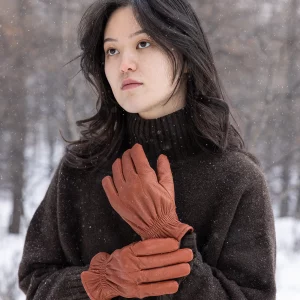
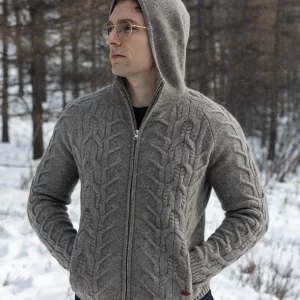
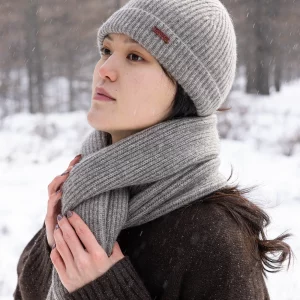
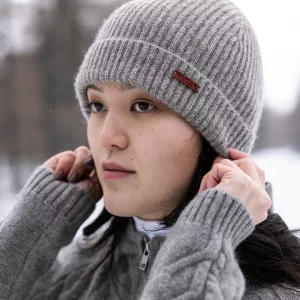
Soft as cashmere. Warmer than merino. Tougher than both. Now let us show you what we made with it.
What Makes Yak Wool the Fiber Cashmere Pretends to Be
Picture the Mongolian steppe in January. Wind. Open grassland to the horizon. Forty below zero.
The yak doesn’t migrate. It doesn’t hibernate. It stands in that cold and grows the answer: a hidden undercoat of down the herders call khullu — fibers measuring just 16 to 19 microns across. That’s cashmere-class fineness, the threshold below which fiber stops feeling like wool and starts feeling like warmth itself.
But here’s where yak leaves cashmere behind.
Each khullu fiber is structured to trap warm air with remarkable efficiency — which is why yak wool insulates better than merino and outwarms cashmere at the same weight. It wicks moisture, so you stay warm without ever feeling clammy. It resists odor naturally, so your sweater stays fresh through weeks of wear. And it’s dramatically stronger than cashmere, which means the soft sweater you buy this winter is still the soft sweater you’re wearing five winters from now — no pilling, no thinning, no bald elbows.
One more thing women with sensitive skin will love: yak wool is naturally low in lanolin, the substance behind most “wool itch.” If wool has always made you scratch, yak wool is the fiber that finally won’t.
Soft as cashmere. Warmer than merino. Tougher than both. Now let us show you what we made with it.
Where It Comes From — and Why You Can Actually Verify It
“Responsibly sourced.” “Himalayan region.” You’ve seen the vague phrases.
We work directly with herding cooperatives on the Mongolian steppe — families who have managed yak herds for over a thousand years. Direct relationships mean we know which valleys our fiber comes from, the herders earn fairly for slow, skilled work, and your garment carries a traceable story instead of an anonymous supply chain. Read it for yourself on our Mongolian Connection page.
There’s an environmental line here too, and it’s not small. Cashmere demand has driven goat overgrazing and desertification across Central Asia. Yaks graze gently — cropping grass rather than tearing it out — and healthy yak herding supports the grasslands and the families on them. That’s why most of our pieces stay in the fiber’s natural greys and browns: less dye, less water, more of the steppe in your hands.