
Yak Wool vs Cashmere
Yak Wool vs Cashmere
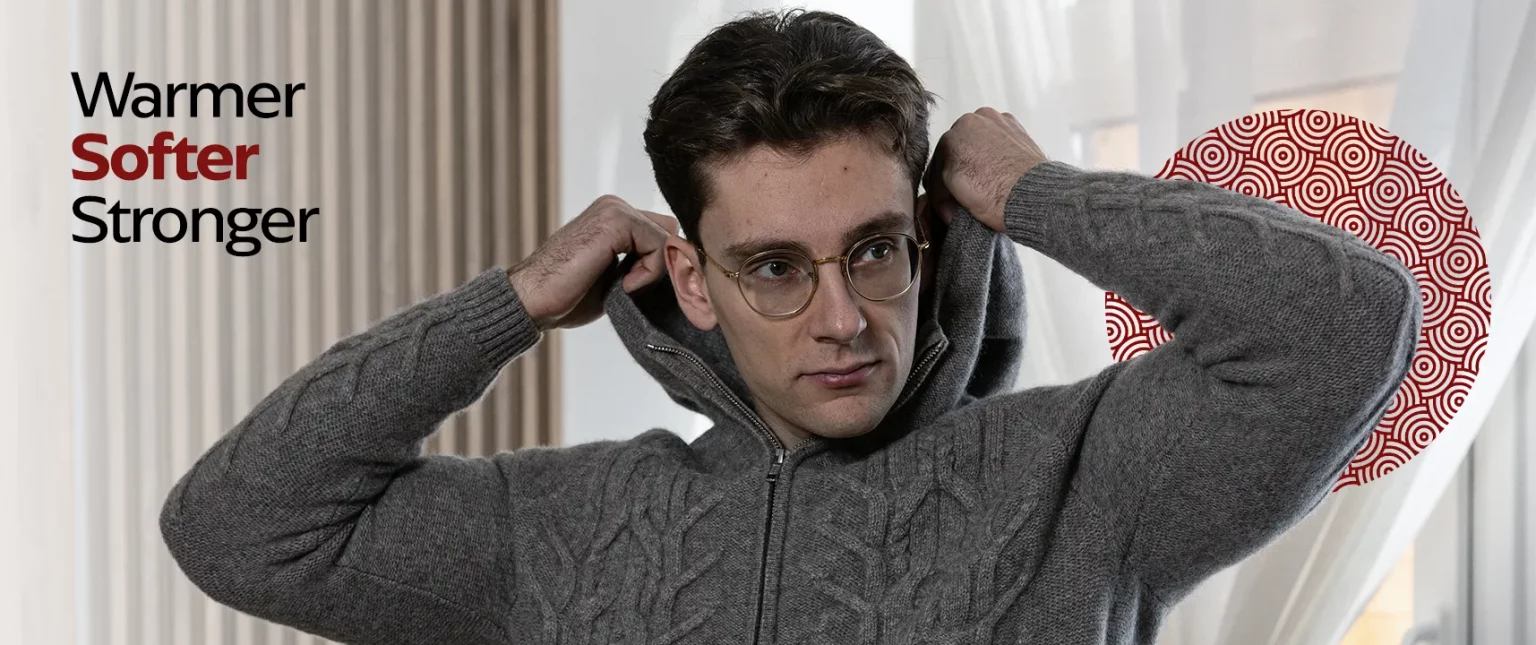
Yak Wool vs Cashmere: Which Is Warmer, Softer, and More Sustainable?
Yak wool matches cashmere for softness, beats it for warmth and durability, and is far more sustainable. Yak down measures 16-20 microns (cashmere is 14-19), so they feel nearly identical against the skin – but yak is roughly 40% warmer than merino by weight, resists pilling, and comes from animals that regenerate grasslands instead of causing the overgrazing linked to cashmere goat farming. Only top-grade cashmere is marginally softer.
Published June 5, 2026 · By Davaadash, YakLux Founder · Reviewed June 2026
If you love the feel of cashmere but you’re tired of pilling, fragility, and the environmental cost, there’s a fiber most people have never worn – and it changes everything. I’ve spent years on the Mongolian steppe working directly with the herders who comb it by hand. Here’s the honest, side-by-side comparison, backed by fiber science, not marketing.
Is Yak Wool Softer Than Cashmere?
Nearly identical, with a slight edge to top-grade cashmere. Softness in any natural fiber comes down to one number: fiber diameter, measured in microns. The finer the fiber, the softer it feels – and anything under roughly 20 microns reads as “luxuriously soft.”
- Yak down: approximately 16-20 microns; the finest grades reach 16-17.5 microns
- Cashmere: approximately 14-19 microns for premium grades, up to 30 microns for lower grades
According to published fiber data (Wikipedia, Yak fiber), the down fiber of the yak ranges 16-20 microns, making its softness comparable to cashmere. In blind touch tests, most people genuinely cannot tell the two apart. Top-grade cashmere is marginally softer at its very finest; yak answers with a hand-feel often called “buttery” – minus the fragility. Verdict: a near-tie, slight nod to premium cashmere.
Is Yak Wool Warmer Than Cashmere?
Yes, decisively. Yaks survive at 15,000–20,000 feet in temperatures swinging from -40°C winters to 90°F summers. Their undercoat evolved hollow, crimped fibers that trap air and regulate temperature with remarkable efficiency.
Independent fiber testing – including research from Sheffield Hallam University’s Centre for Sport & Exercise Science – found yak down is roughly 40% warmer than merino wool by weight, and about 30% warmer than standard sheep’s wool. It delivers that warmth while staying breathable, so you stay warm without overheating. Cashmere is warm, but doesn’t match yak’s warmth-to-weight ratio. Verdict: yak wool.
Which Lasts Longer – Yak Wool or Cashmere?
Yak wool, by a wide margin. This is the difference you feel two seasons after purchase. Cashmere is soft precisely because its fibers are so fine – but that fineness costs tensile strength, so cashmere is famously prone to pilling, thinning, and losing shape.
Yak down has a natural crimp that gives it elasticity and bounce-back cashmere lacks, plus meaningfully better tensile strength and pilling resistance. A well-made yak garment holds its loft, structure, and softness through years of wear and washing. Verdict: yak wool.
Is Yak Wool More Sustainable Than Cashmere?
Overwhelmingly. Surging demand for cheap cashmere has driven goat herds to unsustainable sizes – and cashmere goats tear grass out by the roots, causing overgrazing and desertification. According to industry analysis , an estimated 90% of Mongolia’s grasslands are now at risk of desertification, and each goat yields only about 250 grams of fiber per year – so more goats are needed per garment.
Yaks are the opposite. They are “light-footed” grazers that crop only the tops of plants, leaving roots intact so pastures regenerate. Their down is hand-combed during the natural spring shed – no shearing, no mulesing, no stress. The fiber is biodegradable, and the process supports herding communities that have lived this way for centuries. Verdict: yak wool.
Is Yak Wool Good for Sensitive Skin?
Yes. Both fibers sit well below the ~25-micron threshold at which fibers become stiff enough to poke the skin. But yak down has one extra advantage: like cashmere, it naturally lacks lanolin – the substance in sheep’s wool that triggers many wool allergies. That makes well-processed yak wool naturally hypoallergenic and itch-free for most people, safe even for sensitive skin and children.
Yak Wool vs Cashmere at a Glance
The Bottom Line
Cashmere built its reputation in an era when no one asked hard questions about durability or environmental cost. Yak wool answers both. It matches cashmere where it counts – softness against your skin – then outperforms it on warmth, longevity, and sustainability. For a fiber you’ll wear for years rather than seasons, yak wool is the smarter luxury.
Every YakLux piece is made from 100% pure Mongolian yak down – never blended, hand-combed during the natural spring shed, crafted in undyed natural colors. Explore the collection:
- Men’s Mongolian Yak Wool Clothing – cardigans, jumpers, and beanies
- Women’s Mongolian Yak Wool Clothing – turtlenecks, vests, scarves, and more
- Why Yak Wool? – the full story behind the fiber
- Is Yak Wool Itchy? – what sensitive-skin buyers should know
- How to Care for Yak Wool – keep it soft for years
Frequently Asked Questions
Is yak wool warmer than cashmere?
Yes. Yak down has a superior warmth-to-weight ratio – roughly 40% warmer than merino wool by weight and about 30% warmer than standard sheep’s wool – while remaining more breathable than cashmere.
Is yak wool as soft as cashmere?
Very nearly. Yak down measures about 16-20 microns, overlapping cashmere’s 14-19 micron range, so quality yak wool feels just as soft to most people. Only the finest, most expensive cashmere is marginally softer.
Does yak wool pill like cashmere?
Far less. Yak fiber has greater tensile strength and a natural crimp that resists pilling and holds shape, whereas cashmere pills and thins relatively quickly with regular wear.
Is yak wool more sustainable than cashmere?
Yes. Yaks graze gently and leave grass roots intact, allowing pastures to regenerate, and their down is hand-combed during natural shedding. Cashmere goat farming is linked to overgrazing and desertification across Central Asia.
Is yak wool itchy or good for sensitive skin?
Yak wool is not itchy for most people. Its fine diameter sits well below the threshold that causes irritation, and it naturally lacks lanolin, making it hypoallergenic and suitable for sensitive skin.
How do you wash yak wool?
Hand wash gently in cold water with a wool-specific detergent, or use a delicate wool machine cycle in a mesh bag. Never wring – press water out gently and lay flat to dry. Yak wool is naturally odor-resistant, so it needs washing far less often than standard knits.
Davaadash is the founder of YakLux and works directly with nomadic herder families on Mongolia’s high-altitude steppes, sourcing 100% pure yak down through traditional hand-combing. He has spent years immersed in the craft, sustainability, and fiber science of Mongolian yak wool.